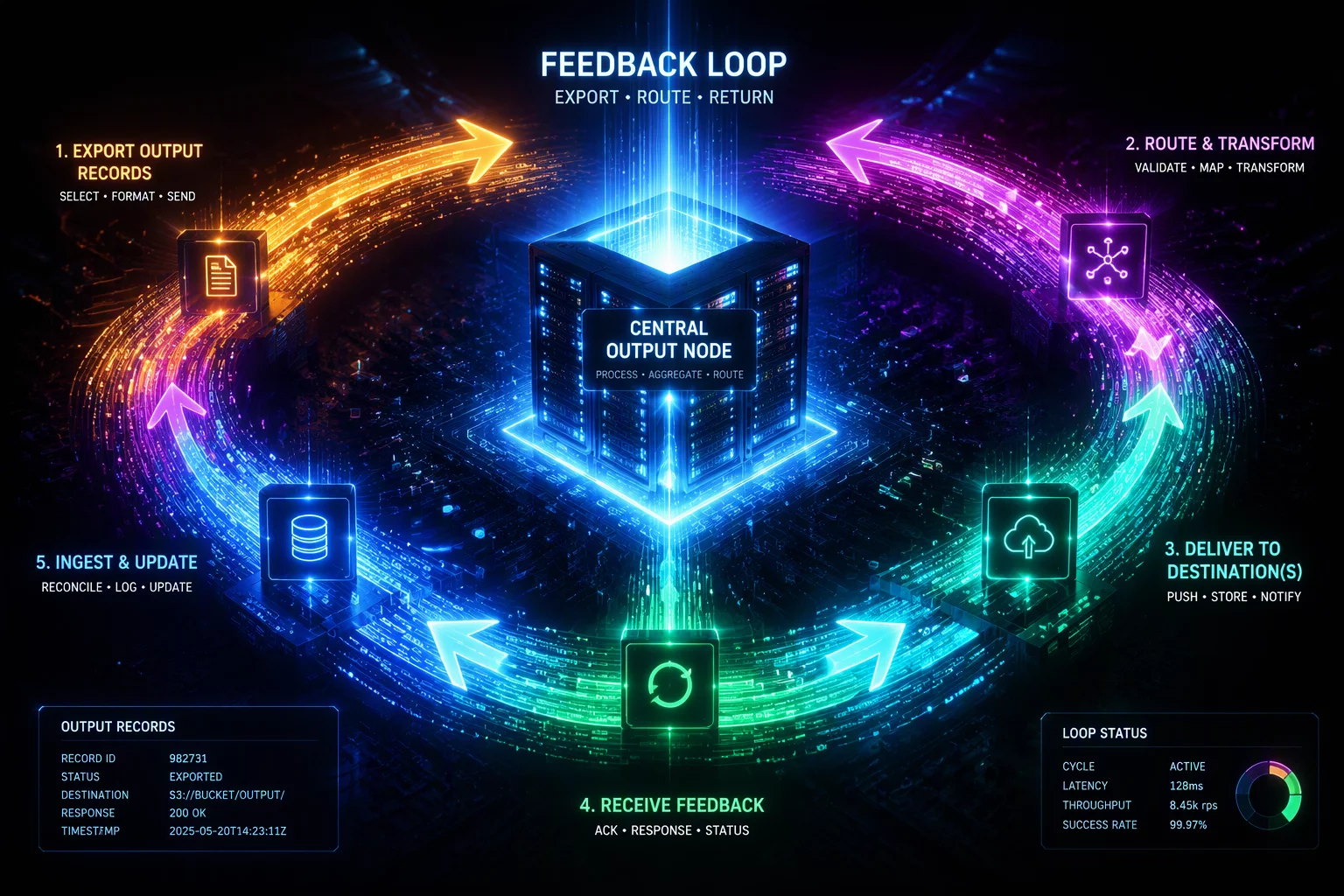
Closing the Loop: Automated Feedback to ERP & Billing Systems
The shipping workflow does not conclude when a label prints. High-performance logistics engines generate comprehensive output records containing carrier tracking numbers, audited freight expenses, and dimensional weight determinations that must seamlessly traverse back into host databases.
The Critical Function of Reverse Shipping Metadata
When a package completes its journey across the packing line and receives an applied shipping label, the executing workstation generates an export payload. This return data stream bridges shipping station execution with upstream management software, converting physical dispatch actions into verifiable accounting and fulfillment milestones.
Primary keys such as purchase order codes, warehouse fulfillment tokens, and carrier consignment references are bundled into output data blocks. Upstream ERP modules require these specific values to switch active sales orders into invoiced statuses, allocate actual freight costs against original shipping quotes, and generate customer dispatch notifications containing live tracking links.
Engineering Resilient Return Data Channels
Export workflows depend heavily on asynchronous decoupling. Direct table locking during high-volume warehouse output often introduces processing freezes at the packing bench. Modern architectures utilize staging tables, message brokers, or buffered batch CSV/XML exporters that insulate station operators from ERP database latency while preserving complete transactional audit trails.
Core Architectural Takeaway
Never construct a shipping pipeline where workstation software writes synchronously to production ERP financial ledgers. Employ intermediate staging schemas or transactional queues to guarantee zero record drops during network splits or host system maintenance windows.
By separating output payload compilation from backend billing consumption, enterprise architects create scalable distribution hubs capable of continuous label generation even during core database maintenance.
Three-Stage Output Pipeline Flow
The output routing lifecycle coordinates multiple software boundary layers, transforming local shipping manifest events into verified enterprise database updates.
Manifest Event Capture
The workstation shipping application commits package dimensions, actual scale weight, carrier service tier, and generated tracking codes to its localized manifest database.
Payload Transformation & Buffer
Middleware export daemons or database triggers translate local table columns into target ERP schema formats, holding records in an isolated transport queue.
Enterprise System Ingestion
Host ERP and WMS instances parse incoming records, update order fulfillment statuses, post freight expenditures, and trigger automated customer tracking emails.
Decoupling output capture from enterprise ingestion ensures packing line operations remain uninterrupted, achieving steady operational throughput across peak distribution hours.
Standard Output Field Mapping Matrix
Below are the core schema field mappings generated during shipment completion, detailing source engines, format restrictions, and downstream system destinations.
| Field Key | Data Source | Validation Rule | Target System |
|---|---|---|---|
MASTER_TRACK_NUM |
Carrier Manifest Engine | Alphanumeric [18-34] String | ERP Sales Order Header |
BILLED_WEIGHT_LBS |
Scale / Dim Divisor Output | Decimal (8,2) Non-Zero | WMS Package Manifest |
NET_CHARGE_AMT |
Contract Rating Engine | Decimal (10,2) Currency Format | General Ledger / Billing |
SHIP_TIMESTAMP_UTC |
Workstation Hardware Clock | ISO 8601 Datetime String | Customer Notification Service |
Strict data type adherence and schema validation prevent conversion exceptions and guarantee frictionless automated batch reconciliation across enterprise databases.
Output Routing Operational FAQ
Answers to essential operational and integration questions regarding return data channels and shipping record propagation.
How should intermittent network dropouts be handled during output routing?
Workstation clients must store export records in a local persistent staging buffer. When network availability is re-established, the sync agent flushes pending records in sequence using unique transaction UUIDs to prevent double-posting in the ERP.
Why is freight expense data segregated from client notification feeds?
Carrier negotiated rates, fuel surcharges, and accessorial fees are proprietary operational costs. Routing them exclusively to finance and accounting tables ensures public customer-facing tracking notifications contain only carrier service names and tracking identifiers.
How are multi-piece parent/child packages handled in the return payload?
Multi-package shipments generate a consolidated parent record featuring the master tracking number and aggregate cost, supplemented by individual child records containing discrete package weights, tracking strings, and container item associations.
Robert King
Robert King is an enterprise systems architect specializing in warehouse management systems, high-volume shipping middleware, and automated logistics data pipelines.
Related Schemas & Data Flows
Expand Your Shipping Architecture Knowledge
Explore additional schema maps, field definitions, and architectural reviews to build robust, fault-tolerant shipping data integrations.
Ask About This Data Map
Share a question about field ownership, record quality, or a system handoff. Please use examples without customer data.